Chapter 1: The Overture – A Texan Crucible
The air in Austin, Texas, crackled with anticipation. The vibrant, eclectic energy of the city seemed to find its focal point at the Circuit of the Americas, a sprawling cathedral of speed carved into the rolling Texan hills. As the sun beat down on the iconic red, white, and blue asphalt, the stage was set for the Sprint Qualifying of the 2025 United States Grand Prix. This was not just a preliminary session; it was a high-stakes overture to the weekend’s racing symphony, a condensed burst of raw speed and strategic chess that would set the tone for the battles to come.
The Sprint format, with its immediate rewards and unforgiving nature, adds a layer of intensity to an already pressure-cooker environment. Teams and drivers have a limited window to perfect their setups and extract the maximum from their machines. Every thousandth of a second is fought for with a ferocity that is palpable, even to the spectators in the grandstands. The iconic Turn 1, a breathtaking uphill climb into a blind hairpin, stands as a monument to the challenges that lie ahead. The fast, flowing Esses that follow demand a car that is both agile and stable, while the long back straight offers a chance for raw power to be unleashed. COTA is a track of contrasts, a crucible that tests every aspect of a Formula 1 car and its driver.
Chapter 2: The Championship Canvas – High Stakes in the Lone Star State
The United States Grand Prix did not exist in a vacuum. It was a pivotal chapter in the unfolding narrative of the 2025 Formula 1 World Championship. The title fight was reaching its zenith, and every point was precious. The Sprint Qualifying, therefore, was not just about securing a good starting position for the Sprint race; it was about landing an early psychological blow and adding to the championship tally.
For the main protagonists in the championship battle, the pressure was immense. Every decision, from tire choice to qualifying strategy, was scrutinized with an intensity that befitted the high stakes. The Sprint format, with its separate qualifying session, offers a unique opportunity. A strong performance can build momentum for the rest of the weekend, while a poor showing can leave a driver on the back foot, facing an uphill battle in both the Sprint and the main Grand Prix.
Chapter 3: A Tale of Two Halves – The Engineering Enigma of COTA
The Circuit of the Americas is a track that engineers both love and hate. It is a circuit of two distinct halves, each presenting a unique set of challenges. Sector 1, with its sequence of high-speed, flowing corners, is reminiscent of Silverstone or Suzuka. It demands a car with a strong front end and excellent aerodynamic grip. The drivers need to be precise and confident, threading the needle through the Esses with a rhythm that is almost poetic.
In stark contrast, Sector 3 is a much more technical and slower section, with a series of tight, challenging corners. Here, mechanical grip and traction are paramount. The cars need to be able to rotate quickly and put their power down effectively on the exit of the corners. The long back straight that connects these two distinct sections adds another layer of complexity. Teams are forced to make a crucial compromise in their setup. Do they opt for a lower-downforce setup to maximize their speed on the straight, or do they sacrifice some straight-line speed for better performance in the corners? This engineering enigma is at the heart of the challenge of COTA, and it is a puzzle that every team must solve.
Chapter 4: The Unfolding Drama – A Chronological Journey Through Qualifying
The Sprint Qualifying session unfolded in a crescendo of speed and drama.
- Q1: The Initial Salvo: The first session was a frantic affair, with all 20 cars on track, vying for a place in the top 15. The track was at its “greenest,” with a dusty surface that offered little grip. The early runners had the difficult task of cleaning the track for those that followed. As the session progressed, the track evolution was significant, and the lap times tumbled. There were the inevitable surprises and disappointments, as some drivers were caught out by the changing conditions or failed to string together a clean lap.
- Q2: The Midfield Melee: With the field narrowed to 15, the intensity ramped up. The battle for a place in the top 10 was fierce, with the midfield teams pushing their cars to the absolute limit. This is where the strategic games often come into play, with teams carefully considering their tire choices and run plans. A place in Q3 is a significant achievement for the midfield teams, and the battle to get there is often one of the most exciting parts of qualifying.
- Q3: The Top-10 Shootout: The final session was a showdown between the fastest 10 drivers. With a limited number of new tire sets available, the pressure was on to deliver a perfect lap. The track was now at its optimal condition, and the cars were running on low fuel. This was a pure, unadulterated display of speed. The final minutes of Q3 were a flurry of activity, as the drivers put it all on the line in their quest for pole position. The timing screens lit up with purple and green sectors, and the order changed with every passing car. It was a breathtaking conclusion to a thrilling session.
Chapter 5: The Performance DNA – A Deep Dive into the Data
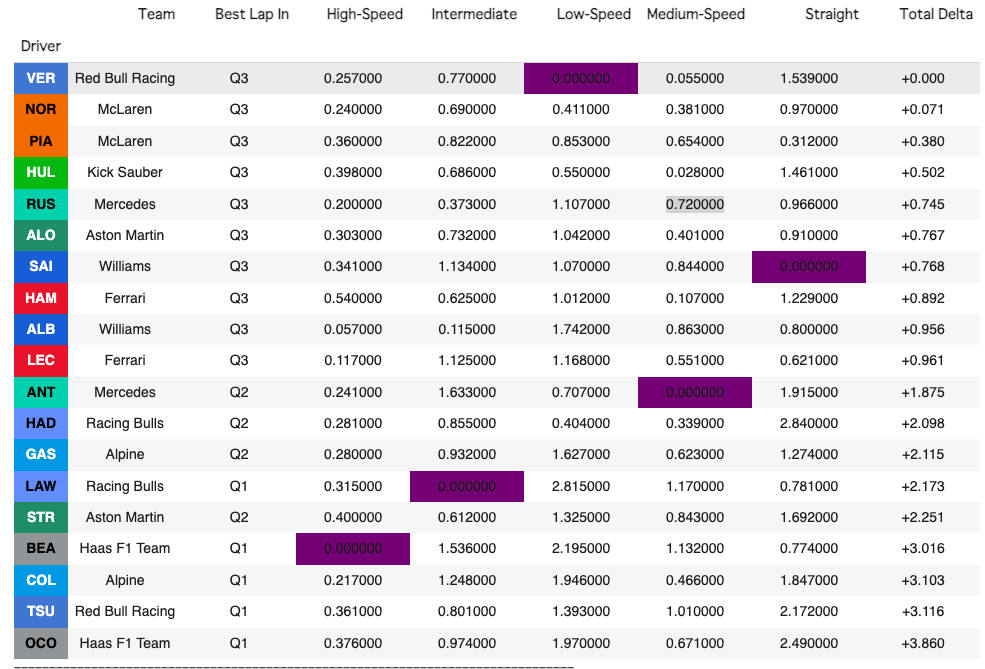
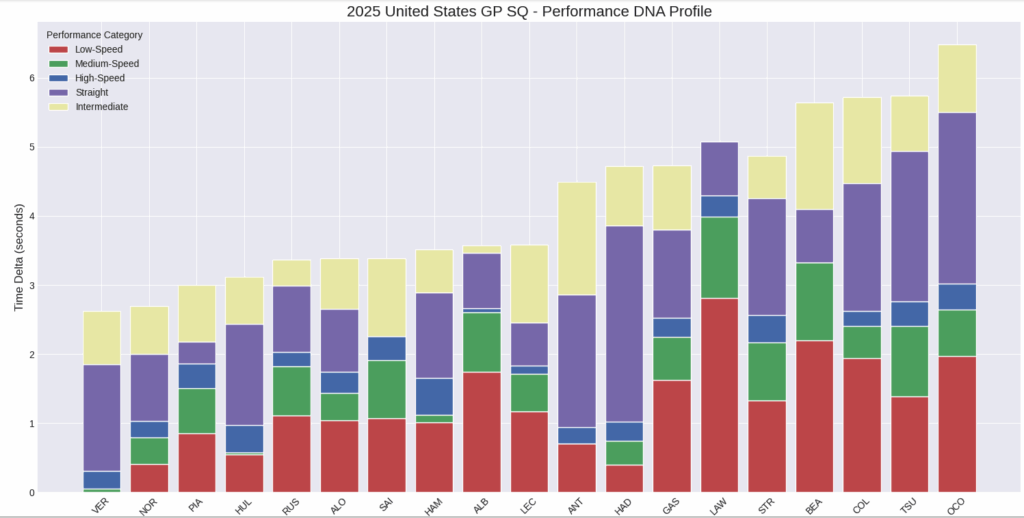
Beyond the raw lap times, a deeper analysis of the data reveals the fascinating nuances of each car’s performance. Our “Performance DNA” analysis breaks down the lap into different corner speed categories, providing a unique insight into the strengths and weaknesses of each car.
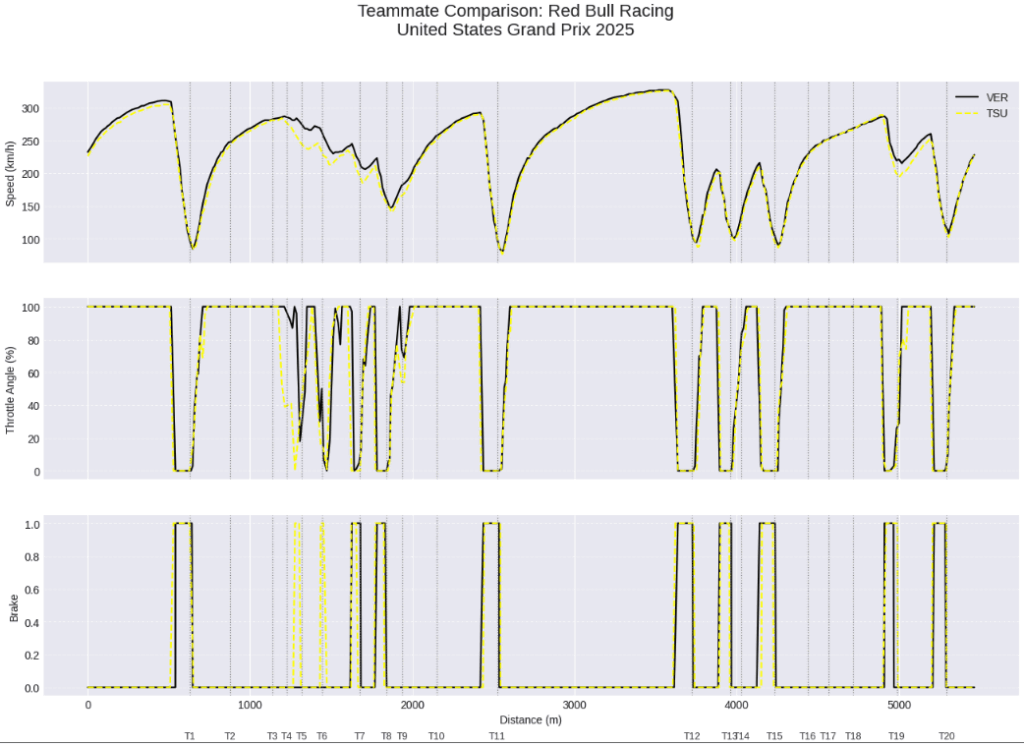
- Red Bull Racing (Max Verstappen): As expected, Verstappen’s Red Bull was the class of the field in the low and medium-speed corners. The car’s ability to change direction with such precision and maintain a high minimum speed through the corners was simply unmatched. This is the cornerstone of Red Bull’s success, and it was on full display at COTA.
- McLaren (Lando Norris & Oscar Piastri): The McLaren was the surprise package of qualifying, showing impressive pace in all areas. Norris, in particular, was able to extract the maximum from the car, demonstrating its all-around strength. The McLaren’s balanced performance, with no significant weaknesses, makes it a formidable contender.
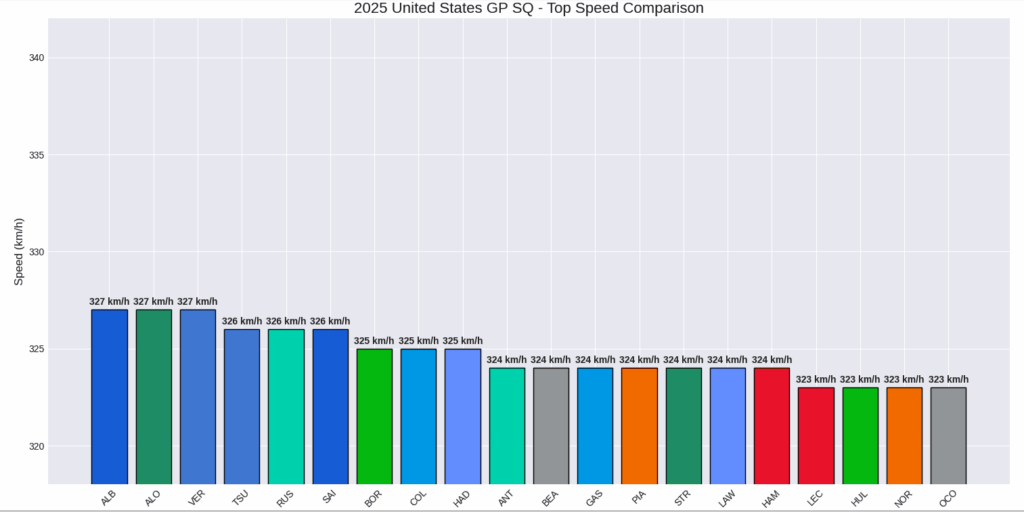
- Williams (Carlos Sainz): The Williams was a one-trick pony, but it was a very impressive trick. The car’s straight-line speed was simply sensational, a clear indication of the team’s low-drag philosophy. However, this came at the cost of cornering performance, and the team will have to find a way to mitigate this in the race.
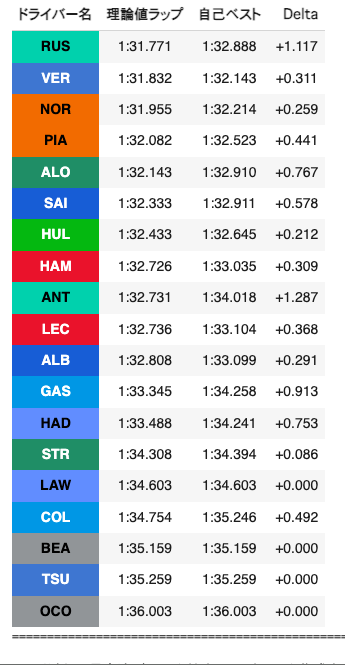
- Mercedes (George Russell): The Mercedes was an enigma. The car showed flashes of incredible pace, particularly in the hands of George Russell, who had the fastest theoretical lap of anyone. However, the team struggled to consistently unlock this potential, and a series of small mistakes proved costly.
- Kick Sauber (Nico Hülkenberg): Hülkenberg’s performance was a testament to his skill and the surprising pace of the Kick Sauber in the medium-speed corners. This was a standout performance that exceeded all expectations.
- Haas (Oliver Bearman) & Racing Bulls (Liam Lawson): While not at the sharp end of the grid, the Haas and Racing Bulls showed flashes of brilliance in specific areas. Bearman was the fastest of all through the high-speed corners, while Lawson excelled in the intermediate sections. These are promising signs for the future.
(Image Placeholder: A detailed dashboard with multiple charts and graphs, showcasing the Performance DNA for each team. This would include radar charts, bar charts, and scatter plots to visualize the data.)
Chapter 6: The Straight-Line Conundrum – Williams’ High-Stakes Gamble
The strategic dilemma faced by Williams is one of the most fascinating subplots of the weekend. Their car is, by a significant margin, the fastest in a straight line. This is a powerful weapon, especially at a track like COTA with its long back straight. In the race, Sainz will be incredibly difficult to overtake. He can use his straight-line speed to defend his position, even against cars that are quicker in the corners.
However, this strategy is not without its risks. The lack of downforce that gives the Williams its straight-line advantage also makes it a handful in the corners. The car is more prone to sliding, which increases tire wear. Over a race distance, this could become a significant problem. Sainz will have to be incredibly smooth and precise in his driving to manage his tires effectively. If he can do that, he could be in for a strong result. But if the tire degradation is too high, he could find himself slipping down the order as the race progresses.
An animation showing the aerodynamic trade-offs of a high-downforce vs. a low-downforce setup, with a focus on the impact on straight-line speed and cornering grip.
Chapter 7: The Papaya Renaissance – McLaren’s Resurgence
McLaren’s performance in the Sprint Qualifying was a clear statement of intent. The team has made significant progress in recent races, and they are now a genuine threat to Red Bull. The MCL38 is a car with no obvious weaknesses. It is fast on the straights, agile in the corners, and, crucially, it seems to be kind on its tires.
Lando Norris’s performance was particularly noteworthy. He drove with a confidence and maturity that belied his years, extracting every last ounce of performance from the car. His consistency is one of his greatest assets, and his ability to deliver a clean, fast lap under pressure is what makes him one of the top drivers on the grid. Oscar Piastri’s strong performance in third place further underlines the strength of the McLaren package. With two talented drivers and a car that is performing at a high level, McLaren is well-positioned to challenge for victories for the remainder of the season.
A photo gallery showcasing the McLaren MCL38 on track at COTA, with close-ups of its aerodynamic details.
Chapter 8: The Silver Arrow’s Enigma – Mercedes’ Unfulfilled Promise
The Mercedes garage was a scene of mixed emotions after the Sprint Qualifying. On the one hand, there was the frustration of not being able to challenge for the front row. On the other hand, there was the tantalizing glimpse of the car’s true potential, as revealed by George Russell’s theoretical best lap.
The W16 appears to be a car with a narrow operating window. When it is in the sweet spot, it is capable of incredible pace. However, it seems to be very sensitive to changes in setup and track conditions. The team has struggled to consistently unlock the car’s full potential, and this has been a recurring theme throughout the season.
The data from Russell’s theoretical best lap will be a source of both encouragement and frustration for the team. It shows that the raw pace is there, but it also highlights the work that still needs to be done to make the car more consistent and user-friendly. If Mercedes can solve this puzzle, they could still be a force to be reckoned with.
Chapter 9: Midfield Maestros – Hülkenberg, Bearman, and Lawson Shine
While the spotlight was on the front-runners, there were several standout performances in the midfield that deserve recognition.
- Nico Hülkenberg: The veteran German driver produced a scintillating lap to put his Kick Sauber in fourth place on the grid. It was a performance that reminded everyone of his exceptional talent and his ability to extract the maximum from any car.
- Oliver Bearman: The young Haas driver impressed with his raw speed, particularly in the high-speed corners. He was the fastest of all through this section of the track, a remarkable achievement for a driver in his rookie season.
- Liam Lawson: The Racing Bulls driver also showed great promise, with a strong performance in the intermediate sections of the track. He has proven to be a quick learner and a valuable asset to the team.
These performances highlight the incredible depth of talent in Formula 1 and the fierce competition that exists throughout the field.
Chapter 10: The Invisible Hand – The Science of Track Evolution
Track evolution is one of the unseen forces that can have a significant impact on a qualifying session. As more cars circulate the track, they lay down a layer of rubber on the racing line. This increases the grip level, and as a result, the lap times get progressively faster.
The rate of track evolution can vary depending on a number of factors, including the track surface, the weather conditions, and the type of tires being used. At COTA, the track evolution was significant, with a machine learning model indicating an average improvement of 0.044 seconds per minute. This meant that being on the track at the right time was crucial. The drivers who ran at the end of each session had a significant advantage over those who ran earlier.
Understanding and predicting track evolution is a key part of a team’s qualifying strategy. They use sophisticated models to forecast how the track will evolve, and they use this information to decide when to send their drivers out on track. It is a complex and fascinating aspect of Formula 1 that often goes unnoticed by the casual observer.
Chapter 11: The Mini-Sector Melee – Where a Thousandth of a Second is an Eternity
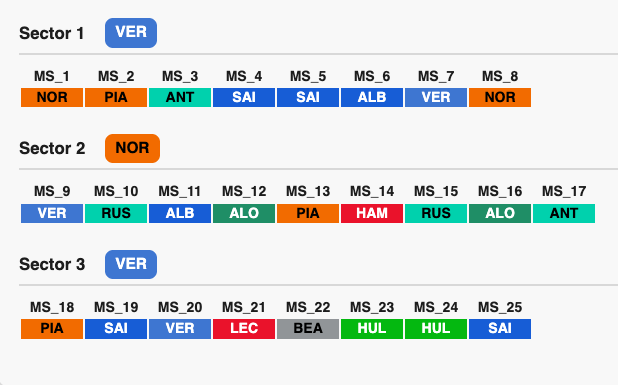
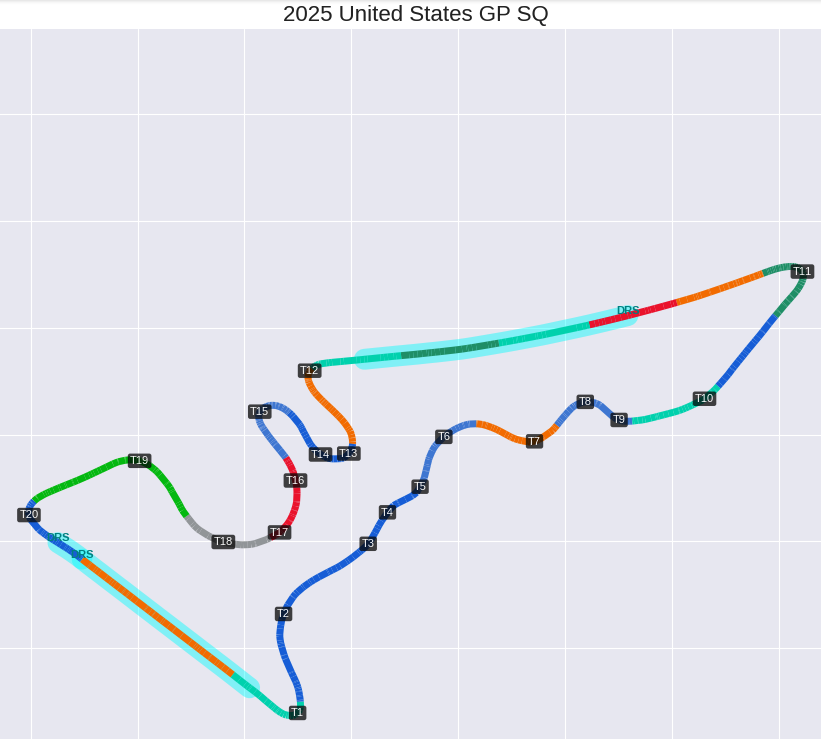
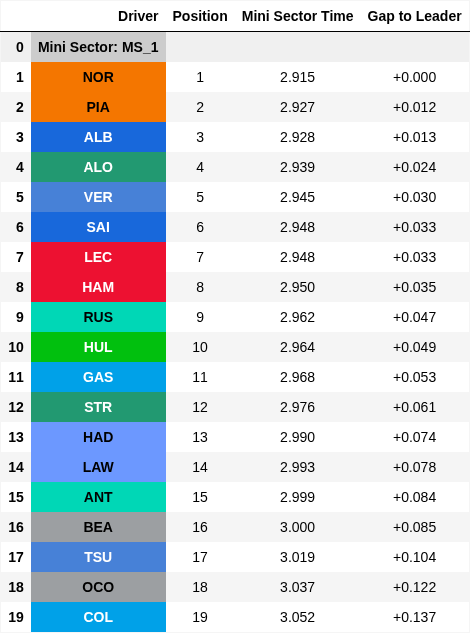
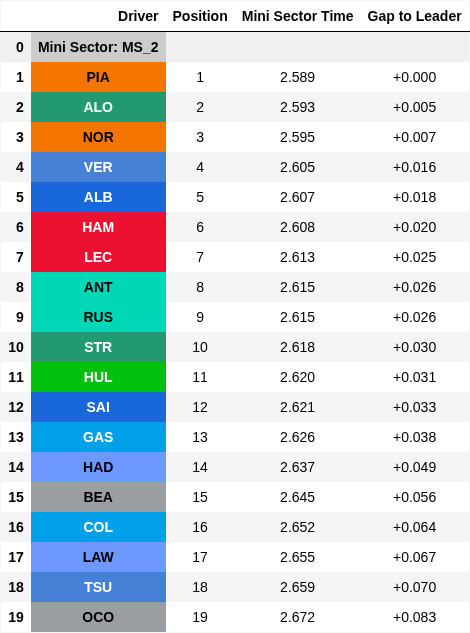
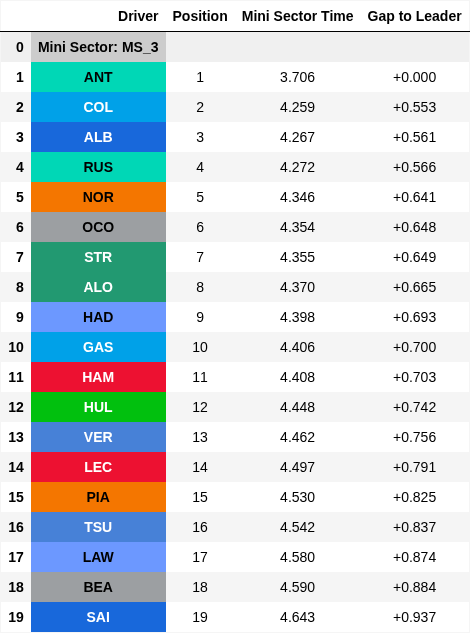
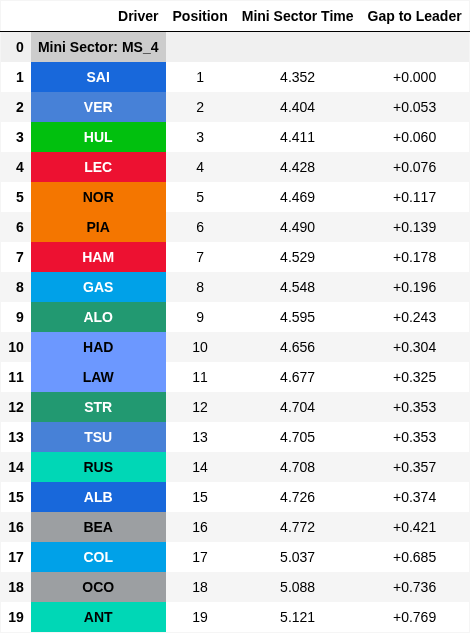
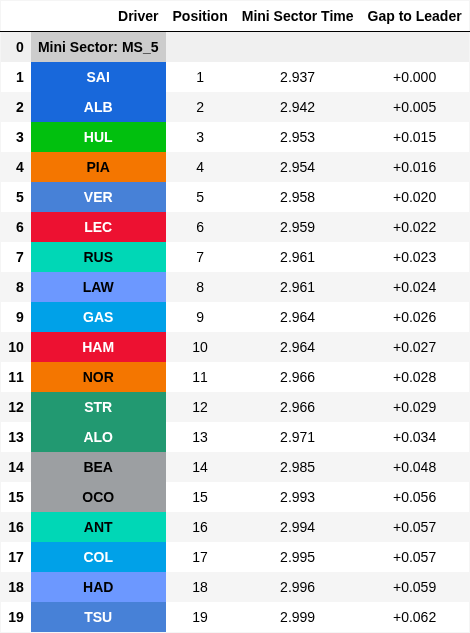
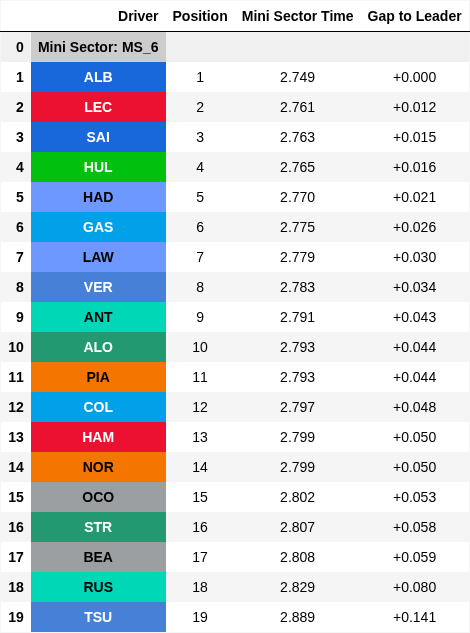
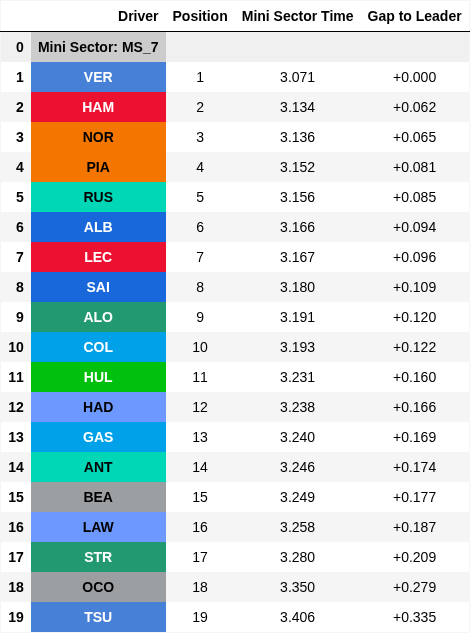
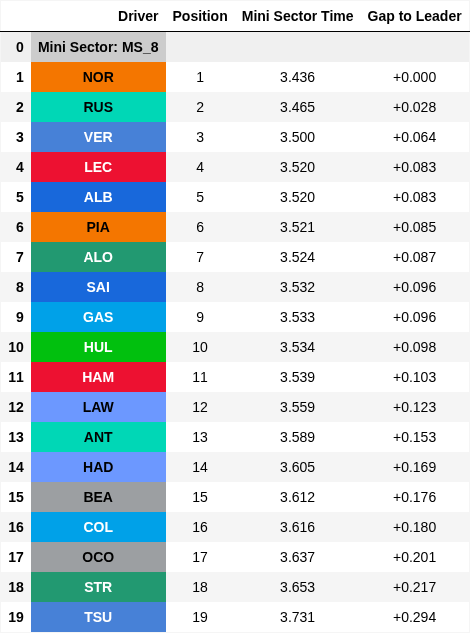
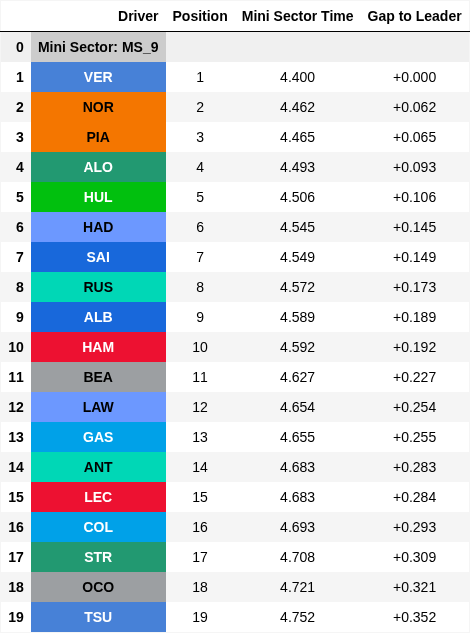
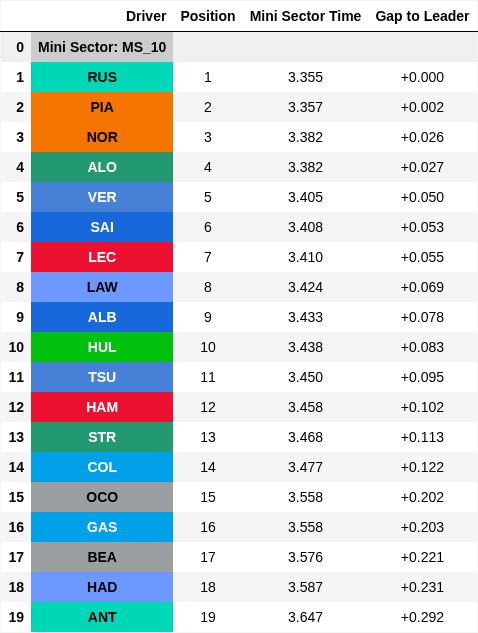
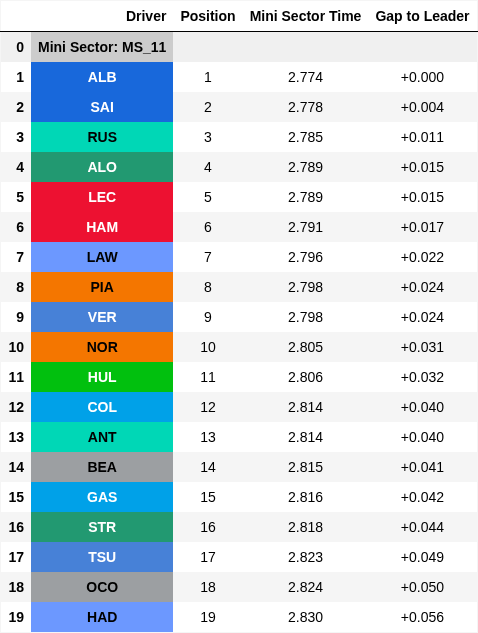
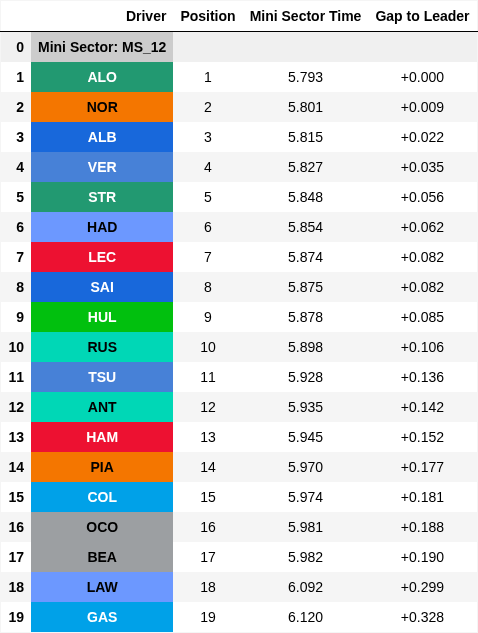
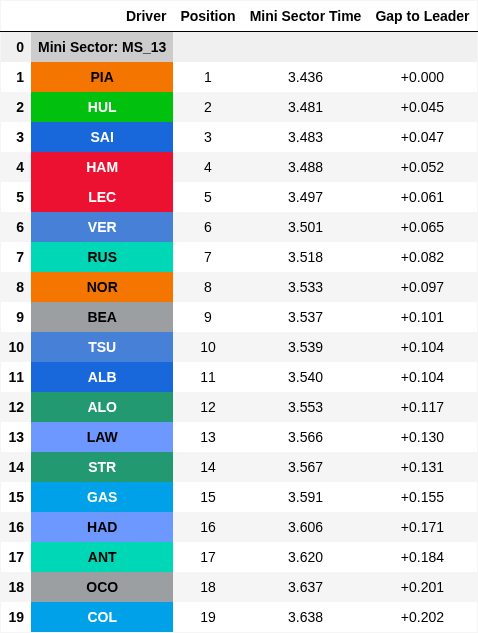
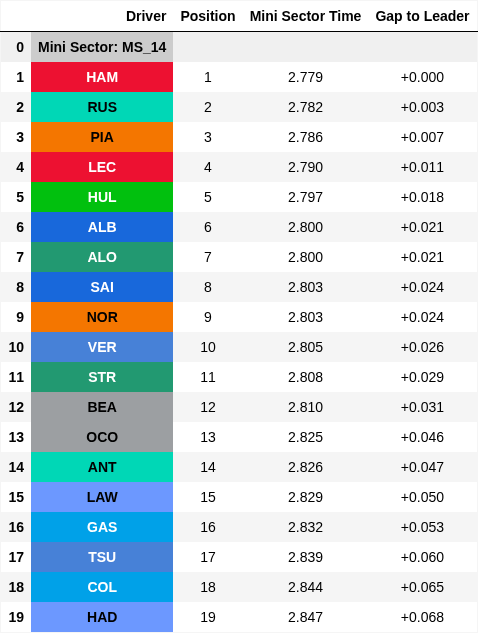
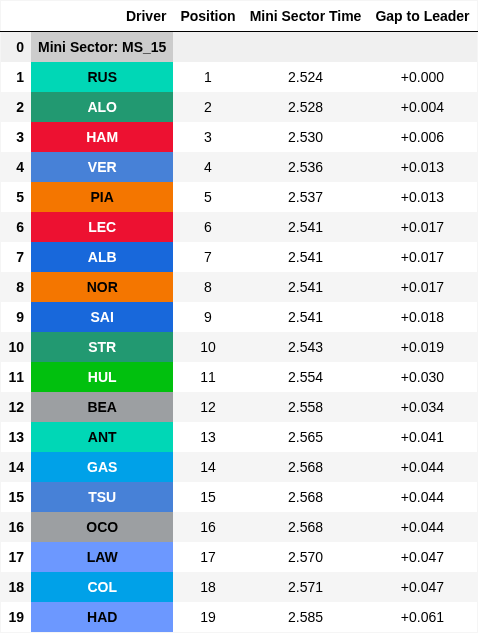
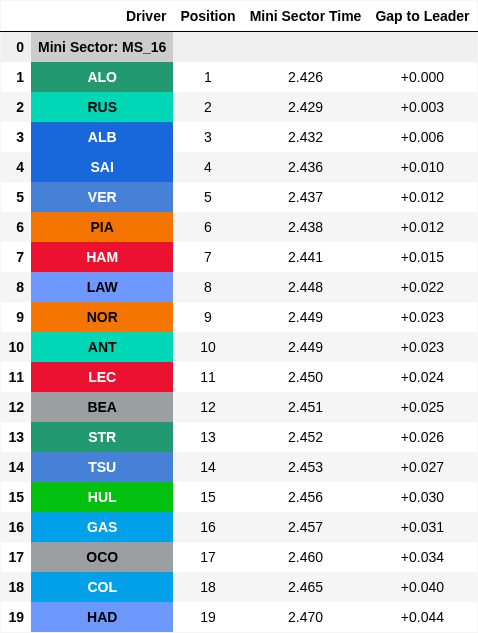
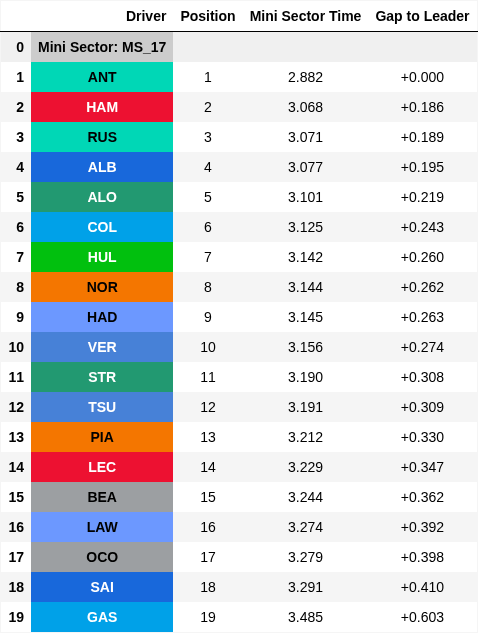
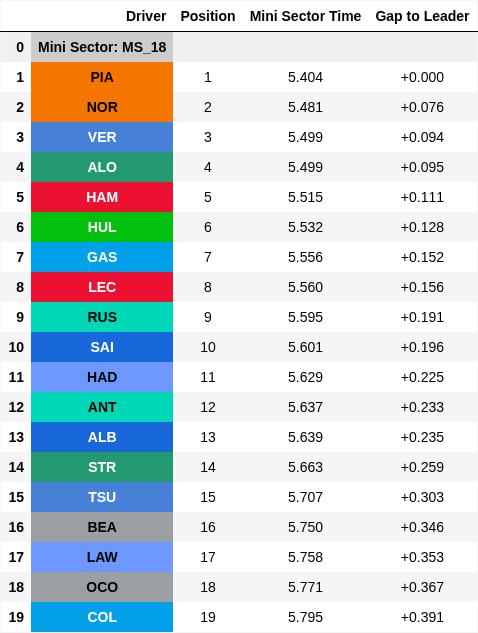
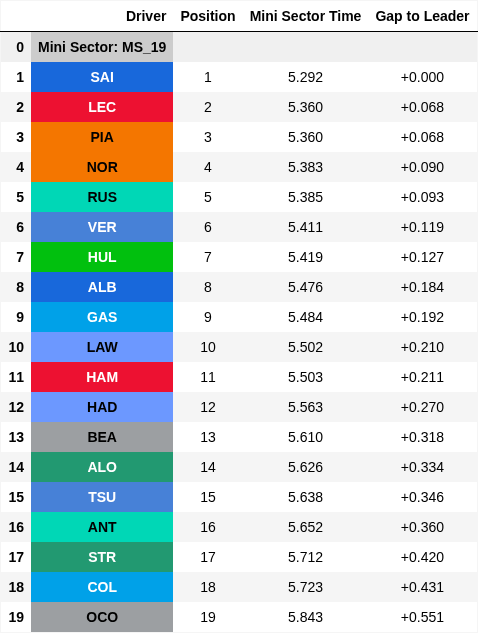
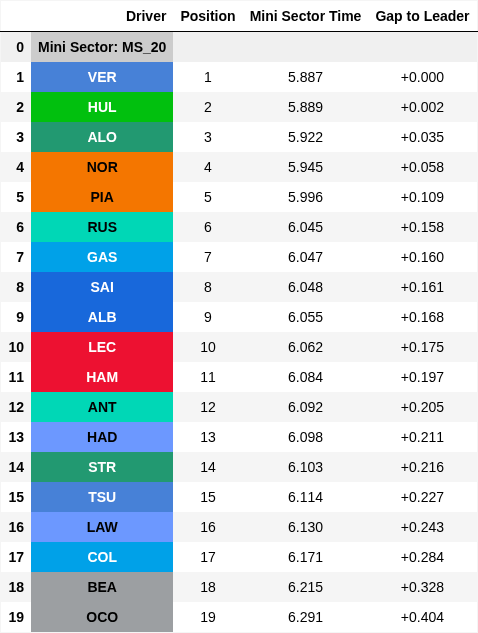
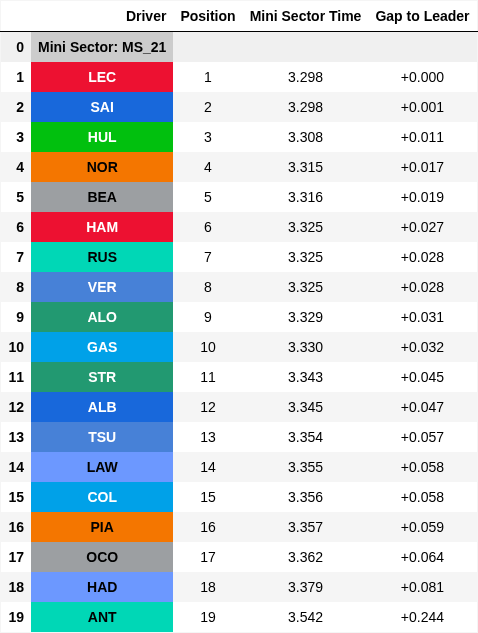
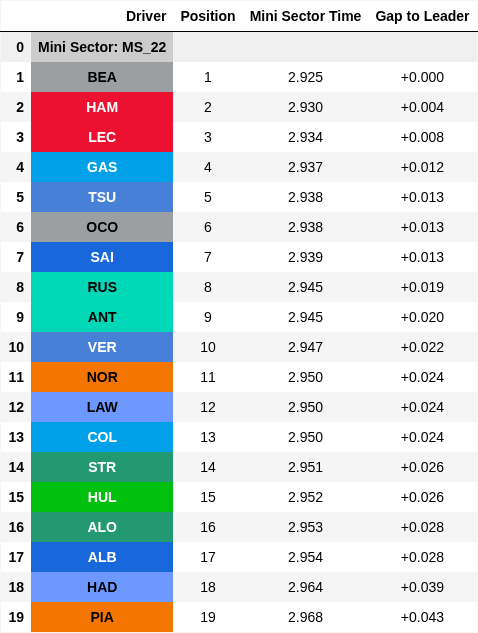
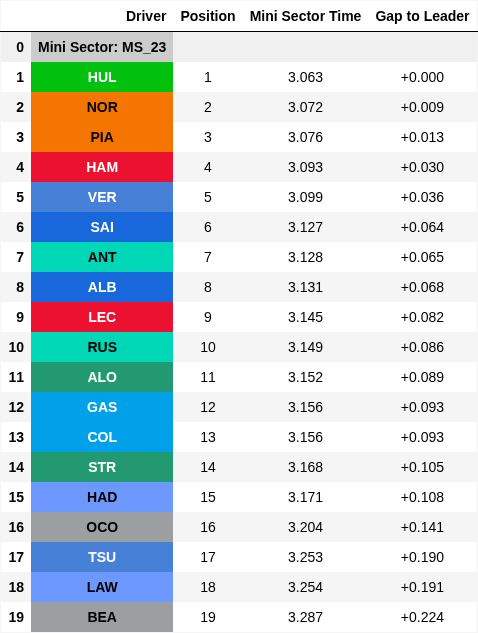
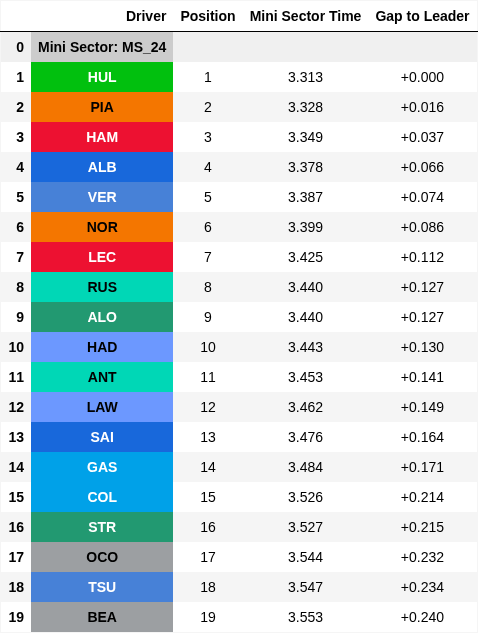
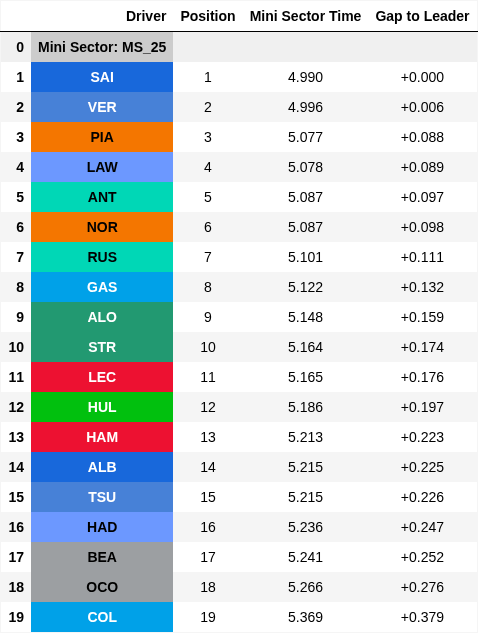
To truly understand where the Sprint Qualifying was won and lost, we need to zoom in and analyze the lap at a granular level. By breaking the lap down into 25 mini-sectors, we can see exactly where each driver was gaining and losing time.
This micro-level analysis reveals a fascinating patchwork of performance. While Verstappen was the fastest overall, there were several other drivers who were quicker in specific mini-sectors. For example, Norris was a master of the high-speed Esses in Sector 1, while Sainz’s straight-line speed advantage was clearly visible on the back straight.
This data is invaluable for the teams, as it allows them to identify the specific areas where they need to improve. It also highlights the different driving styles of the drivers and how they approach each corner. It is a testament to the incredible level of detail and analysis that goes into modern Formula 1.
Chapter 12: The Road Ahead – Strategic Implications for the Weekend
The results of the Sprint Qualifying have set the stage for a thrilling weekend of racing.
- The Sprint Race: The short, sharp nature of the Sprint race will be a fascinating test of strategy. With no mandatory pit stops, track position is everything. Verstappen will be looking to convert his pole position into a comfortable victory, but he will face a strong challenge from the two McLarens. Further down the field, Sainz’s straight-line speed will make him a difficult car to pass, while Russell will be looking to make up for his disappointing qualifying result.
- The Grand Prix: The main event on Sunday will be a much longer and more strategic affair. Tire management will be crucial, and the teams will have to be on top of their game with their pit stop strategies. The contrasting strengths of the different cars will make for a fascinating tactical battle. Can Red Bull’s cornering prowess overcome Williams’s straight-line speed? Can McLaren’s all-around strength propel them to victory? And can Mercedes unlock the full potential of their enigmatic car?
Chapter 13: Coda – A Texan Thriller Awaits
The Sprint Qualifying for the 2025 United States Grand Prix was more than just a qualifying session; it was a compelling narrative of speed, strategy, and human drama. It was a showcase of the incredible talent of the drivers and the engineering brilliance of the teams. From Verstappen’s masterclass in cornering to Williams’s audacious straight-line gamble, the session was filled with intriguing storylines.
As the sun sets on the Circuit of the Americas, the stage is set for a weekend of unforgettable racing. The symphony of speed that began with the Sprint Qualifying is about to reach its crescendo. The drivers are ready, the cars are primed, and the fans are on the edge of their seats. A Texan thriller awaits.
コメント